


















PRODUCT CARE
Each Ginori 1735 creation is born from the skilled hands of our master artisans, custodians of a centuries-old tradition and of Made in Italy excellence. Our products are not mere objects, but artworks to be lived every day, designed to withstand the passage of time without losing their beauty.
To preserve their charm, we invite you to follow small care gestures—daily rituals that celebrate the value of handmade artistry.
On each product page, as well as on the leaflet included in the packaging, you will find specific guidelines for proper maintenance to help you preserve these precious creations.
Each product requires special care: select a category to discover how to take care of it.


WHITE AND DECORATED PORCELAIN
General care and maintenance guidelines
Ginori 1735's white porcelain is a very durable material, made from high-quality raw materials, fired at high temperatures and covered with a hard, vitreous glaze. Following a few precautions during use and cleaning helps preserve the aesthetic and technical qualities of Ginori 1735 products.
- How does Ginori 1735 ensure the compliance of its products for food use, and which regulations are followed?
All Ginori 1735 products are manufactured in accordance with European Regulations EU Regulation (EC) 2023/2006 and (EC) 1935/2004 for food contact materials. All decorations are tested for food compliance (metal release) in accredited laboratories according to the following standards:
- European Regulation EC 1935/2004 and Directive 2005/31/EC
- Japanese MHLW Migration Specification No. 370 (2008 revision)
- U.S. FDA Compliance Policy Guides 7117.06 – 7117.07
- China - GB 31604.34-2016 & GB 31604.24-2016
- GSO ISO 6486-2 and Gulf Technical Regulation GSO 2231 + ISO 17294-2:2023
Limits and specifications for the State of California:
Regarding commercialization in California, Ginori 1735 refers to the limits prescribed by Proposition 65. If thresholds are exceeded, as required by law, Ginori 1735 notifies the retailer, who may continue to sell the product provided that the end consumer is correctly informed.
All tableware decorations by Ginori 1735 are tested and designed to be compliant for food contact according to international standards.
For decorations intended for ornamental use only and not compliant with food contact regulations, the product page clearly states that the item is not suitable for food use. This applies to certain pieces from the "Arte" collection by Gio Ponti.
- Are Ginori 1735 porcelains resistant to thermal shock?
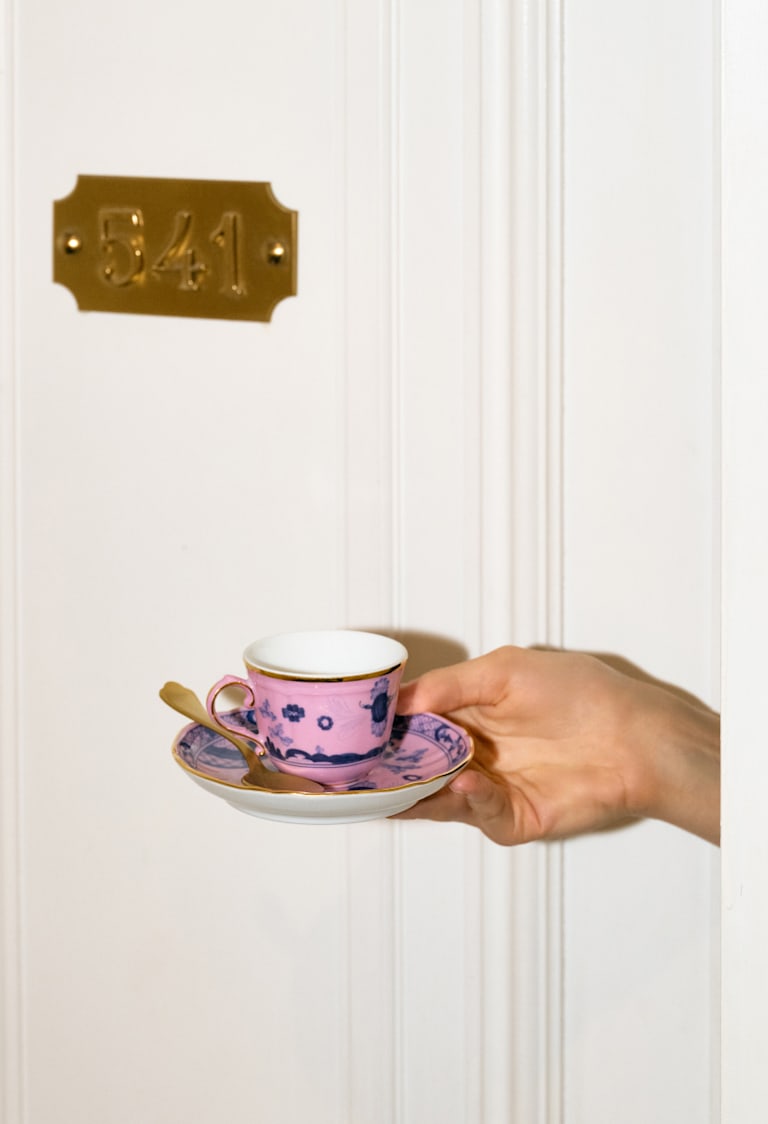
Yes, our porcelain is resistant to thermal shock. However, to prevent damage, we recommend leaving the teaspoon inside cups or mugs when pouring very hot liquids.
- Are Ginori 1735 porcelains dishwasher safe?
The resistance of decorated Ginori 1735 products to dishwashing is assessed according to EN 12875-4. Each product page provides specific care instructions.
- Are Ginori 1735 porcelains microwave safe?
Microwave resistance is assessed according to UNI EN 15284. White products and decorations without precious metals are microwave safe. However, care must be taken to avoid sudden temperature changes. Collections decorated with precious metals such as gold or platinum must not be used in the microwave.
- Can Ginori 1735 porcelains be used in the oven or in direct flame?
No, since these are not products specifically made for oven use, Ginori 1735 porcelains should not be used in a conventional oven or in direct contact with flame. It is possible to heat the porcelain gradually up to 100°C; however, temperature shocks greater than 100°C should be avoided, such as removing the item from the oven and immediately placing it on a cold surface.
- Can I put porcelain in the freezer?
Yes, porcelain can be placed in the freezer, but be very careful when reheating. Sudden temperature changes (e.g., from freezer to hot oven) can cause thermal shock and material breakage.
- How should I care for ornamental porcelain items like vases, statues, candleholders, etc.?
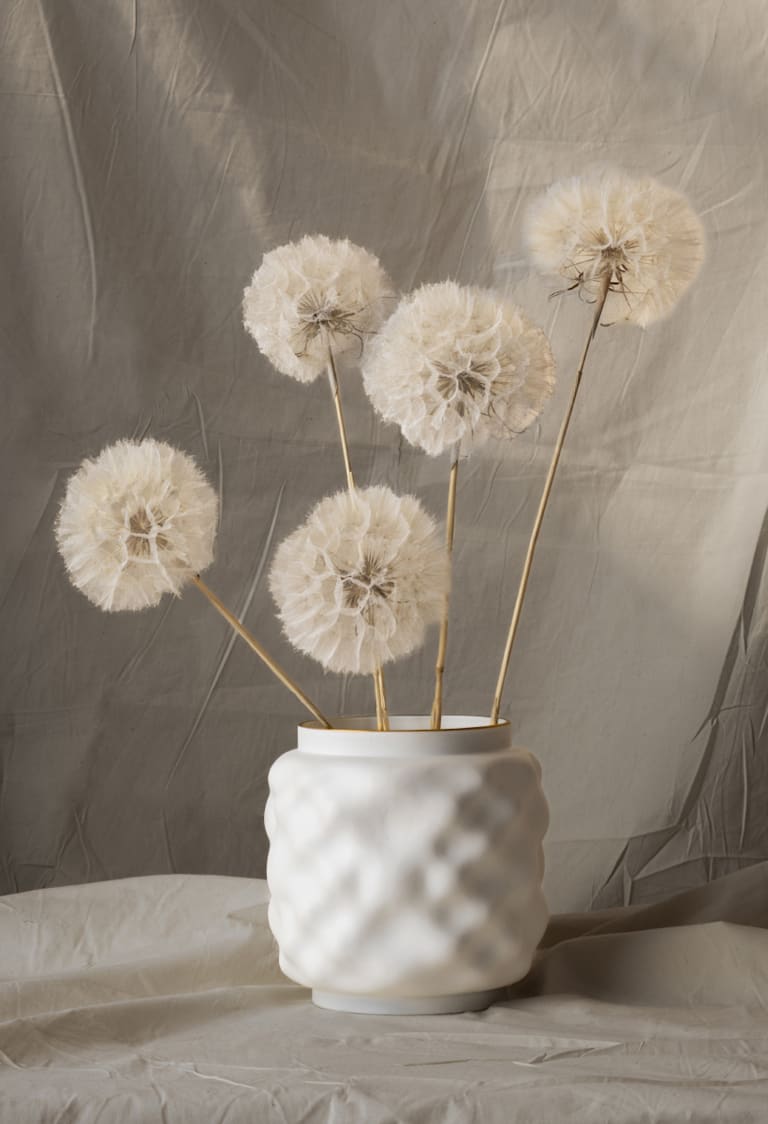
To preserve the beauty and integrity of ornamental porcelain, wash them by hand using a mild detergent. Alternatively, use a damp microfiber cloth or anti-static duster. Do not use acidic or abrasive solvents. These items are not suitable for dishwashers or microwaves.
For biscuit (unglazed) porcelain: in case of metal marks, use slightly abrasive or powdered cleaners on undecorated areas.
- How should I care for porcelain and metal items?
Items made of porcelain and metal cannot be used in the oven or microwave and should not be washed in the dishwasher. For proper cleaning, use a mild soap and a soft cloth, and wash by hand. Do not use harsh or abrasive detergents. Dry after washing to prevent stains or metal oxidation. To remove signs of oxidation, use a product specifically designed for metal cleaning.
Do not use sharp or abrasive objects to avoid scratches. Avoid exposing the item to sudden temperature changes.

WHITE AND DECORATED PORCELAIN WITHOUT PRECIOUS METALS
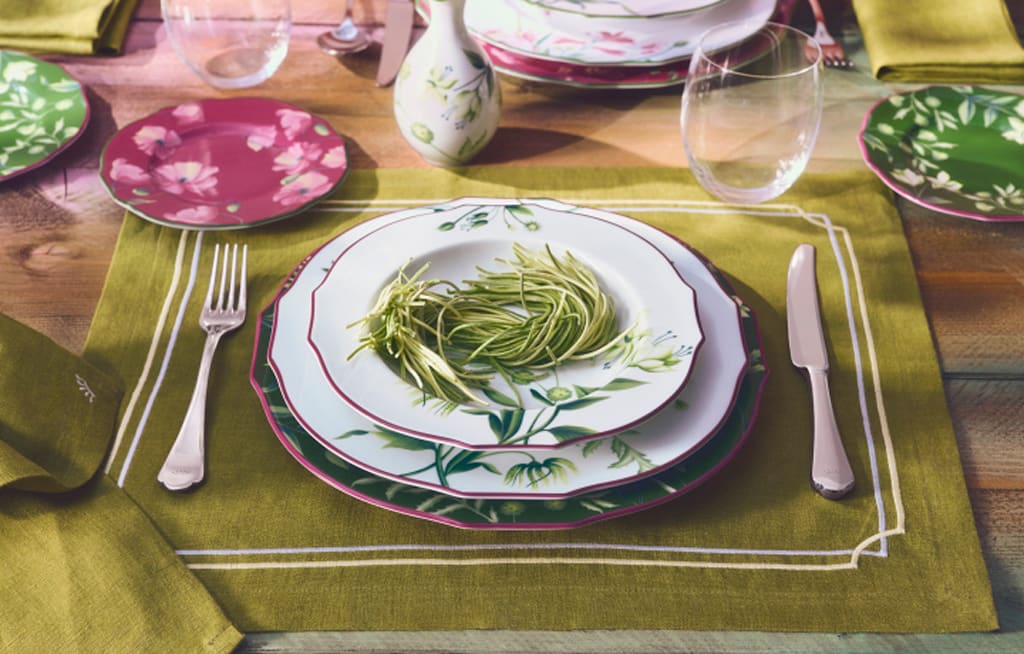
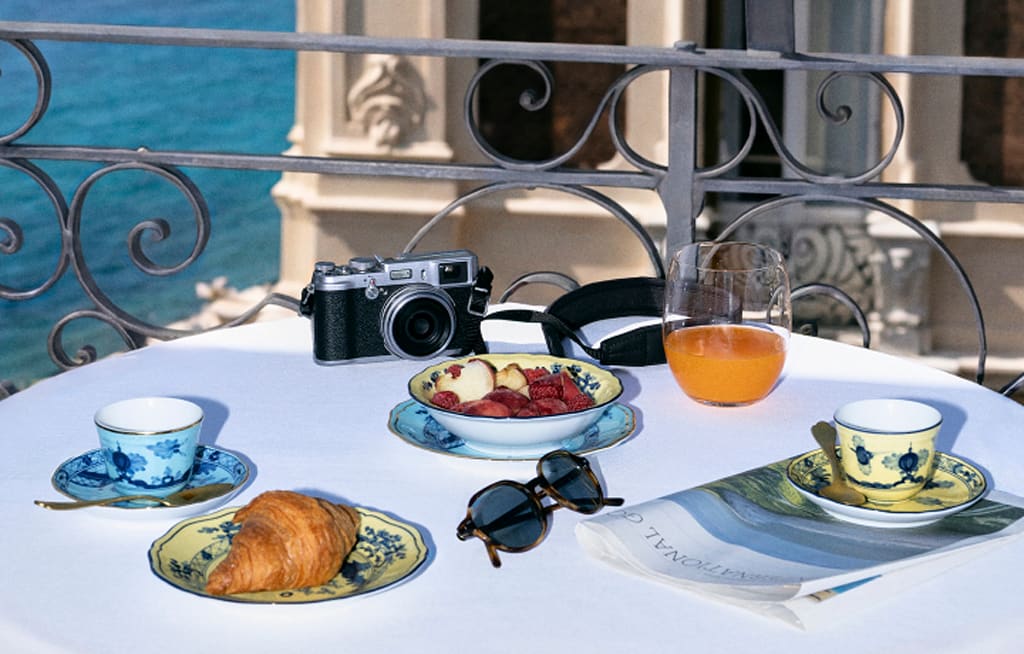
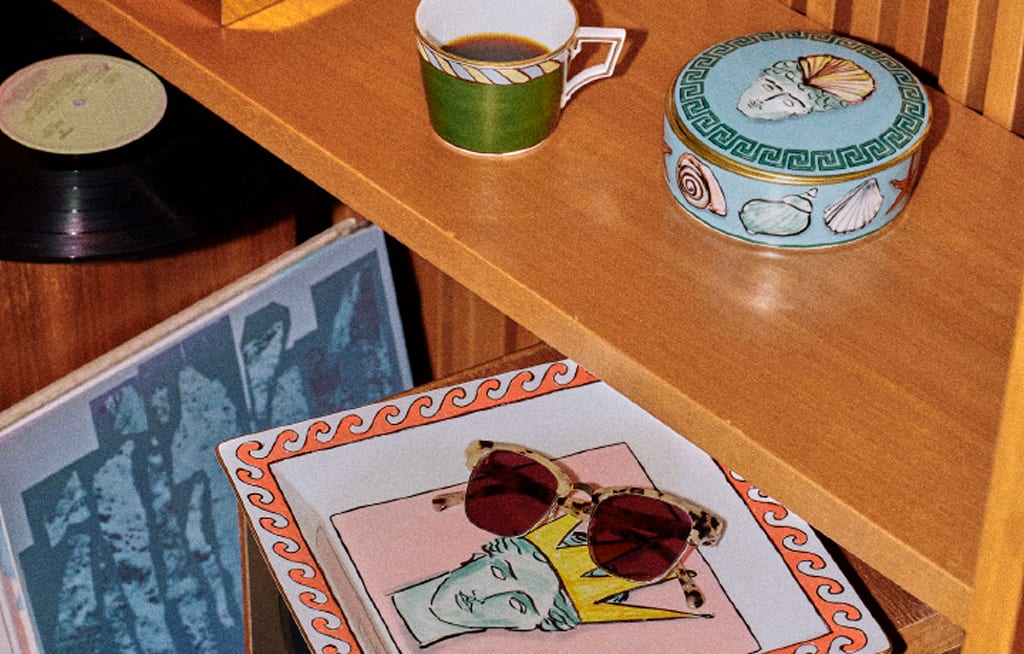
Each Ginori 1735 creation—white or decorated—is a unique piece. The color tones from hand-painted, hand-decorated, or airbrushed techniques are a tangible sign of exceptional craftsmanship. Each product embodies the essence of history, art, and Made in Italy.
- Why is it important to place paper between stacked porcelain plates?
Porcelain body is a material harder than the glaze; for this reason, when stacking plates, care must be taken not to rub the “foot” of one piece against the surface of another. Plates should be stacked by alternating each piece with a layer of paper.
- How can I remove grey scratches left by cutlery on porcelain?
The glaze is harder than some cutlery metals. Grey marks are metal deposits and can be removed using non-aggressive powdered cleaners or a paste made from baking soda and water.
- Why is it recommended to rinse porcelain immediately after drinking tea or coffee?
It is recommended to rinse the porcelain immediately after drinking tea or coffee, as these beverages can stain the surface. Prompt rinsing helps prevent the formation of stains, which can eventually be removed with a non-abrasive cleaner or a solution of 1 part bleach and 8 parts water.
- Can white or non-metallic decorated items be washed in the dishwasher?
The dishwasher resistance of Ginori 1735 decorated products is tested according to the EN 12875-4 standard. White products are resistant to all dishwasher cycles. Decorated products without precious metals can be washed in the dishwasher using the eco cycle (50°C) and non-aggressive detergents (e.g. liquid or gel soaps).
- Are white or non-metallic decorated items microwave safe?
Yes, white products and decorations without precious metals have no contraindications for microwave use. However, care must be taken to avoid sudden temperature changes.

PORCELAIN DECORATED WITH PRECIOUS METALS
Tradition and artisanal mastery come together in the expression of timeless beauty.
Meticulous attention to detail reflects a unique knowledge, preserved and passed down by master artisans from generation to generation.
Each piece embodies history, art, and the authentic spirit of Made in Italy.
- What can I do to prevent scratches on decorations with precious metals?
Regarding scratch resistance, the same precautions generally apply as for decorations without precious metals. However, the latter are much more sensitive to scratching compared to not decorated material, so the use of interleaving sheets is particularly recommended.
- How can I remove possible stains?
Precious metals contain a percentage of silver which, over time, when exposed to air, forms a patina that can be removed by cleaning with a soft cloth and Argentil (or a similar product) without rubbing too hard. This phenomenon is especially noticeable where fingerprints are present.
- Can products with precious metal decorations be washed in the dishwasher?
Yes, precious metals can be washed in the dishwasher. However, they can be easily scratched, so before washing it is good practice to soften all encrustations and food residues, use liquid detergents without lemon, and select economy programs (55°C), paying attention to placing items properly in dishwasher racks that are in good condition. After washing, leave the door slightly open to prevent condensation from forming on the precious metal. The use of abrasive powders and metal scrubbers is absolutely to be avoided. For particularly delicate decorations, such as those done by hand, hand washing with non-abrasive sponges is recommended.

CANDLES
Instructions for use and safety
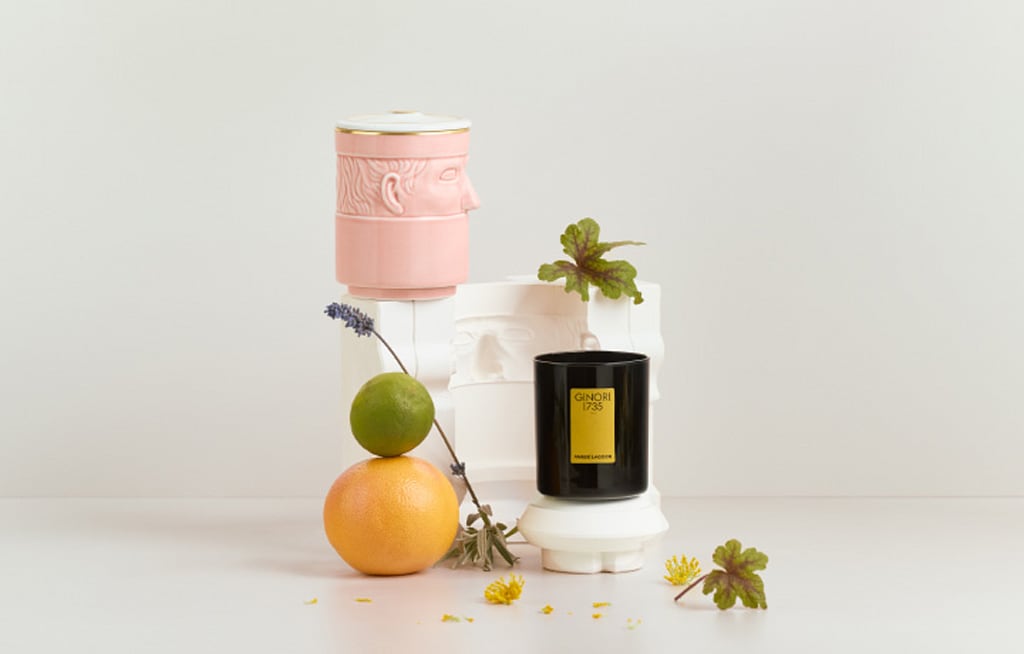
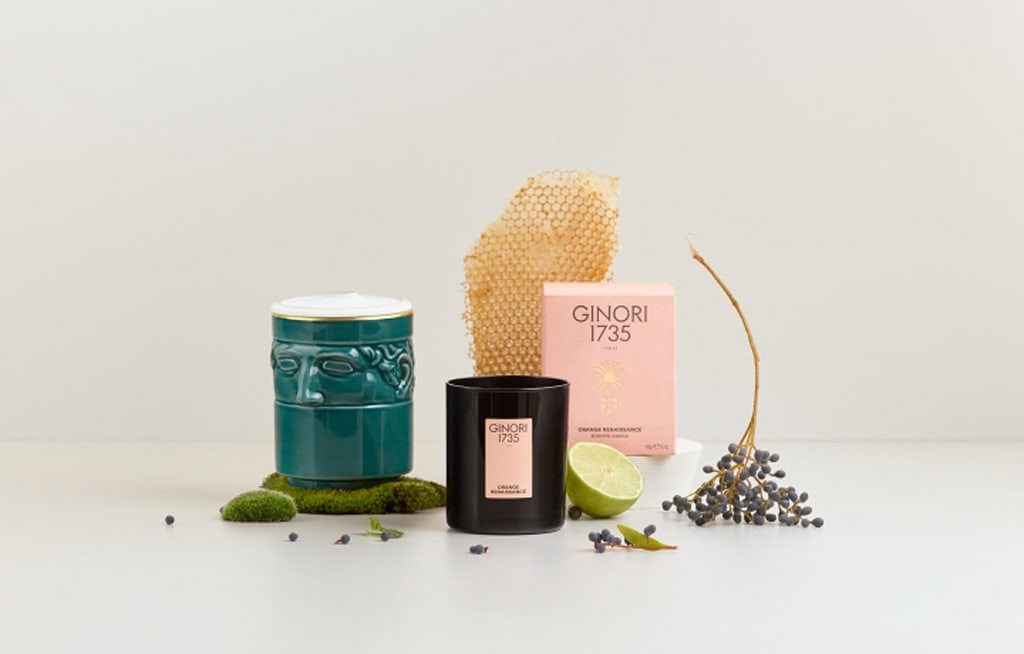
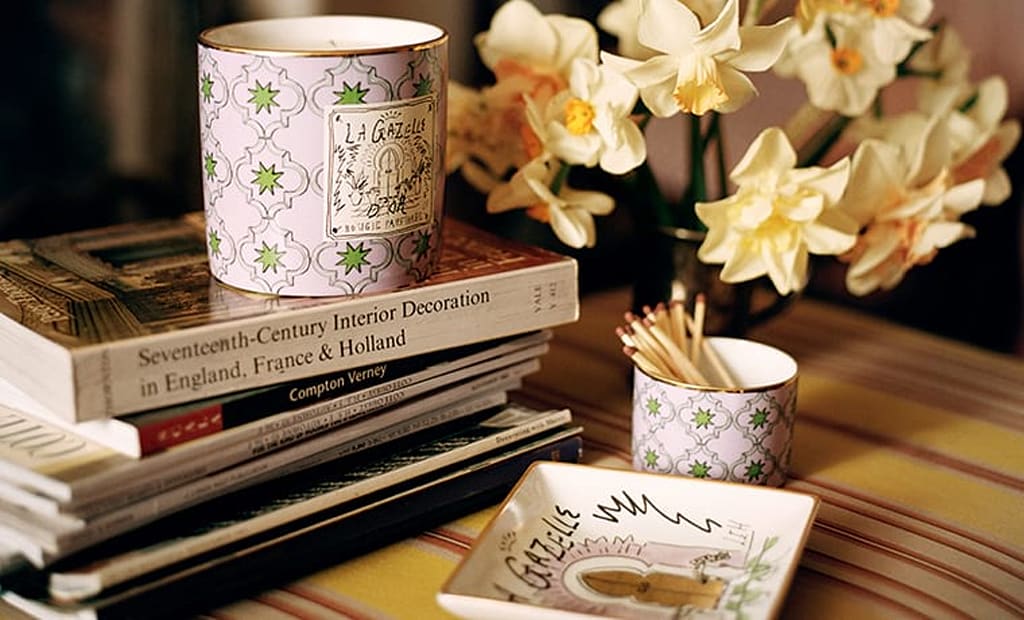
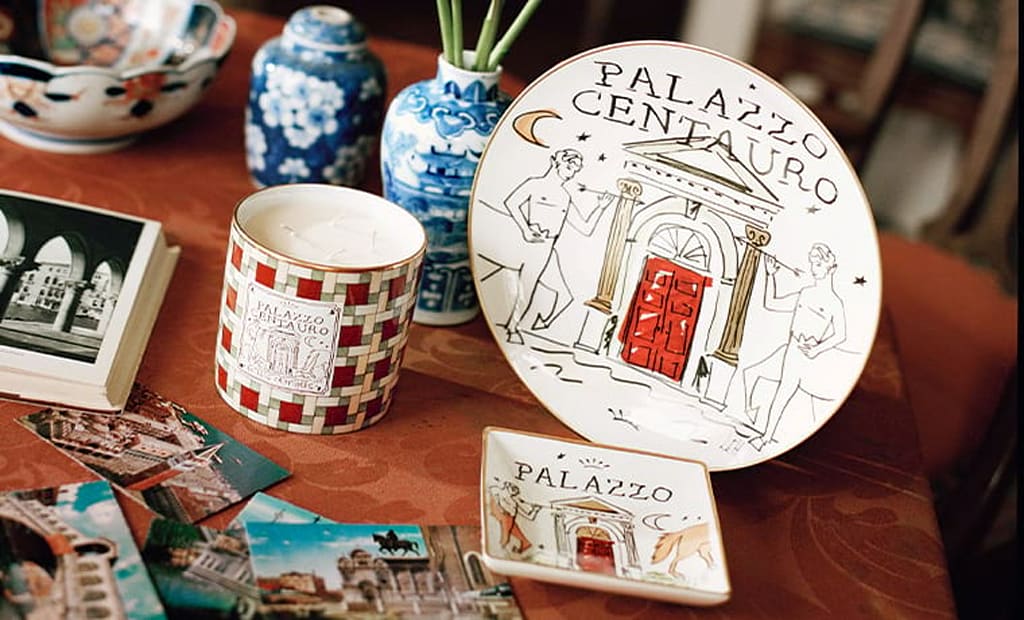
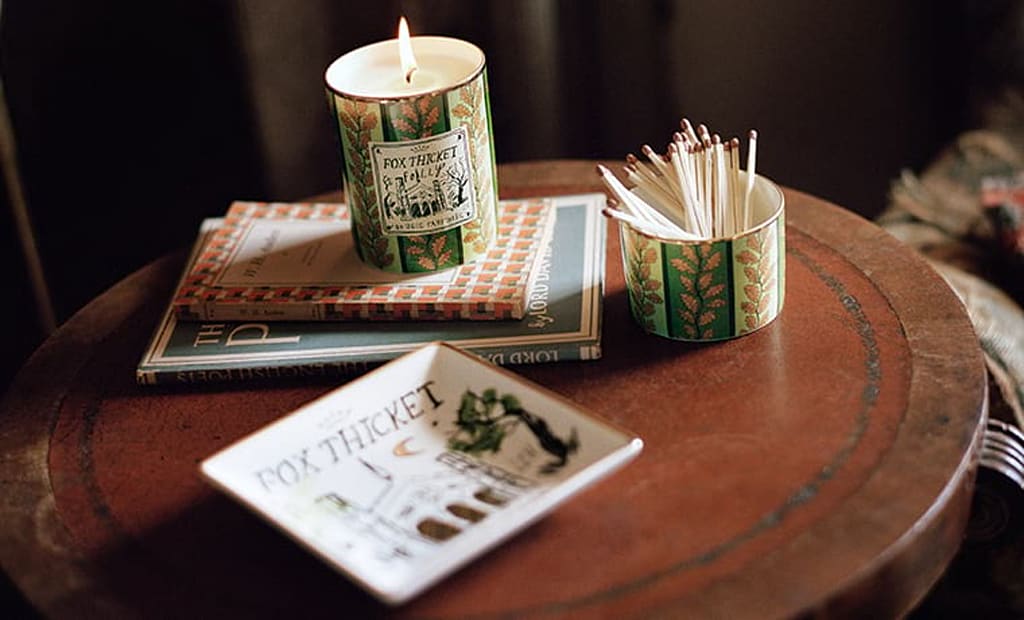
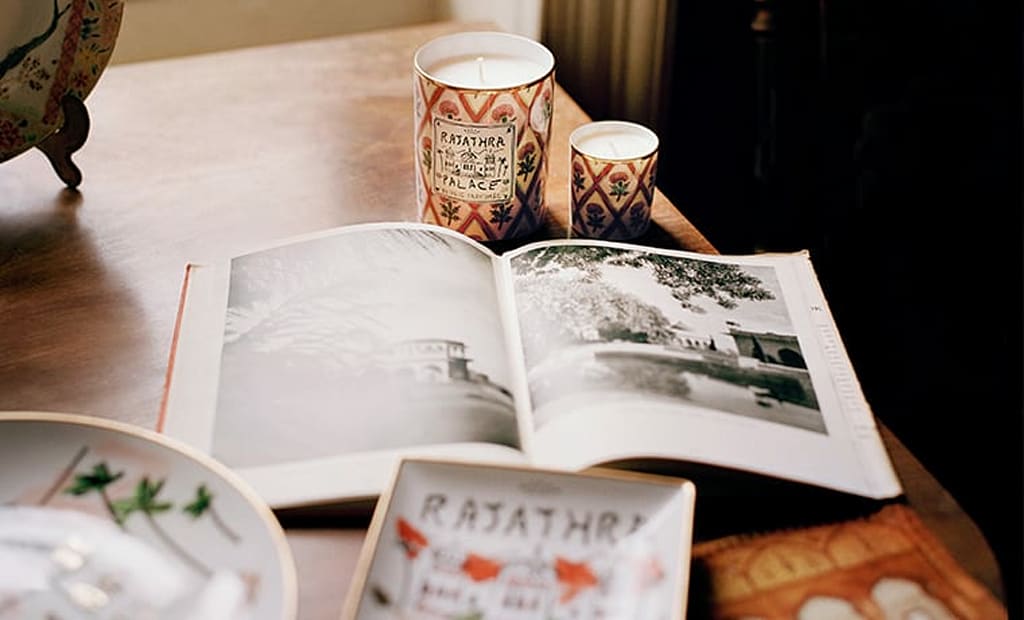
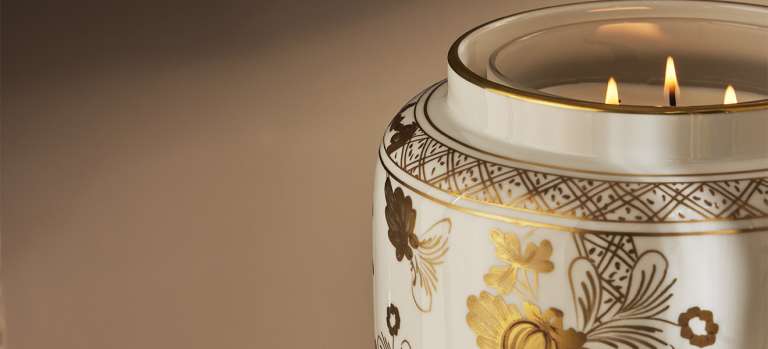
The art of perfume and the art of living well are the highest expressions of Ginori 1735 craftsmanship, and our design candles are the result. Refined decorative objects that embody meanings, memories, and messages.
- How long can I keep my candle lit?
We advise not to leave the candle lit for more than 4 hours consecutively.
- How long do Ginori 1735 candles last?
The duration depends on the size: smaller models last approximately 12 hours, while larger ones can last up to 130 hours. The estimated duration is always indicated on the product page so you can choose accordingly.
- What should I do before re-lighting the candle?
Let the candle cool completely, then trim the wick to about 5 mm and remove any debris from the wax surface.
- What precautions should I follow for safe and correct use of Ginori 1735 candles?
- Do not move the candle while lit or when the wax is liquid.
- Extinguish carefully, preferably with a snuffer.
- Position candles at least 20 cm apart.
- If used outside the porcelain container, place it on a heat-resistant surface.
- Keep away from drafts, light sources, heat sources, and flammable materials.
- Never let the flame touch the container.
- Do not use if the container is cracked, chipped, or scratched.
- Extinguish the candle when there is ±½ cm (≈¼ inch) of wax remaining.
- Keep out of reach of children and pets.
- How should I dispose of the product and container?
Do not release the container into the environment. Dispose of both product and container according to local, regional, national, or international waste disposal regulations.
- What should be done in case of contact with skin?
If contact occurs, wash thoroughly with water and soap. In case of irritation or rash, consult a physician, keeping the container or label at hand.
- Is it advisable to keep candles out of reach of children?
Yes, it is essential to keep them away from children.
- How to choose the right candle for you?
We recommend choosing the candle that best suits your personal tastes and the environment where you wish to place it. On each product page, you will find the indicated fragrance family: this will help you navigate the different scents and find the one that best matches your preferences. Whether you’re looking for a relaxing scent for the bedroom or an energizing fragrance for the living room, the fragrance family will guide you to the perfect choice.

INCENSE
Instructions for use and safety
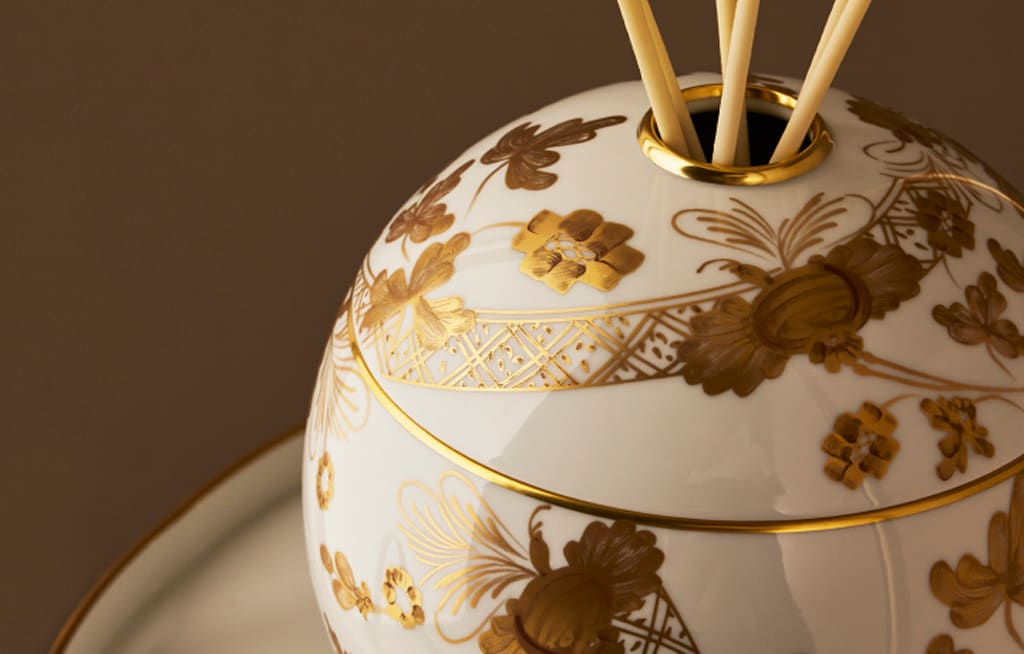
Ginori 1735 incense takes the soul on a journey suspended between reality and imagination, between memory and dream. Unique and delicate fragrances awaken intimate memories and forgotten sensations through floral, spicy, citrus, aromatic, and herbal notes. Each scent is harmoniously paired with the color and style of its incense burner, creating a perfect balance between aesthetics and emotion.
- What is the correct way to prepare and light Ginori 1735 incense?
Insert the bamboo end into the incense holder, ensuring it is stable. Light the scented end of the incense, wait a few moments, then extinguish the flame. The glowing tip will slowly consume the fragrance. Let the scent diffuse naturally in the environment.
- What precautions should be taken for the safe and proper use of Ginori 1735 candles?
- Never leave incense unattended while lit.
- Keep away from flammable materials (curtains, paper, fabrics, etc.).
- Do not place incense directly on unprotected or heat-sensitive surfaces.
- Place in a well-ventilated area but away from direct drafts.
- Let it cool completely before removing any residue.
- How to dispose of the product and container properly?
Do not release the container into the environment. Dispose of both according to applicable local, regional, or national waste disposal regulations.
- What are the main safety instructions for Ginori 1735 products?
- Keep out of reach of children.
- Do not ingest or use for unintended purposes.
- Use only in suitably ventilated environments.
- What makes Ginori 1735 natural incense unique?
Our natural incense is made in Italy using untreated bamboo and high-quality ingredients. The fragrances, IFRA‑certified, use only natural colors and are completely ecological, non-toxic, and non-polluting. Thanks to its innovative formula, it does not release fine dust and diffuses an intense scent that creates an enveloping ambiance.

Instructions for use and safety
Our designer home fragrances not only scent the air but also stand out among the décor for their delicate beauty, making them a gift that will surely be appreciated. Have fun trying them all and choosing your favorite—none will leave you indifferent.
- How do I correctly prepare the ambient diffuser from the LCDC collection?
To prepare the LCDC collection room diffuser, first remove the cap from the fragrance bottle. Then, place the glass container inside the porcelain base of the Amazzone. Carefully pour the entire contents of the bottle into the container, then cover it with the porcelain lid of the Amazzone. Finally, insert the reeds into the container to allow the scented liquid to be absorbed and the fragrance to gradually diffuse into the environment.
- How do I correctly prepare the diffuser from the Tesori collection?
To prepare the Tesori collection room diffuser, first remove the cap from the fragrance bottle. Then, insert the reeds to allow them to absorb the liquid.
- How long does it take for the reeds to fully absorb the liquid?
The complete absorption of the liquid by the sticks may take up to 24 hours.
- How can I increase fragrance intensity?
You may flip the reeds periodically to enhance diffusion.
- How long does the fragrance of Ginori 1735 room diffusers last?
Estimated duration is between 90 and 120 days.
- Do the fragrances of room diffusers contain alcohol?
The LCDC collection’s formula is alcohol-free, while the Tesori collection contains alcohol.
- What should I do in case of skin contact?
If contact occurs, wash thoroughly with water. Keep the container or label available in case a medical consultation is needed.
- What should I do in case of eye contact?
In case of contact with the eyes, rinse them thoroughly for several minutes and remove contact lenses if possible, then continue rinsing. Always keep the container or label handy in case of medical advice.
- Is it advisable to keep diffusers out of reach of children?
Yes, definitely keep them away from children.

Instructions for use
The stone diffuser with essential oil combines aesthetics and wellness, transforming any space into an environment of sensory balance. Thanks to its unmistakable and enveloping fragrances, it provides a continuous, natural, and refined olfactory experience.
- How do I correctly prepare the diffuser stone from the Tesori collection?
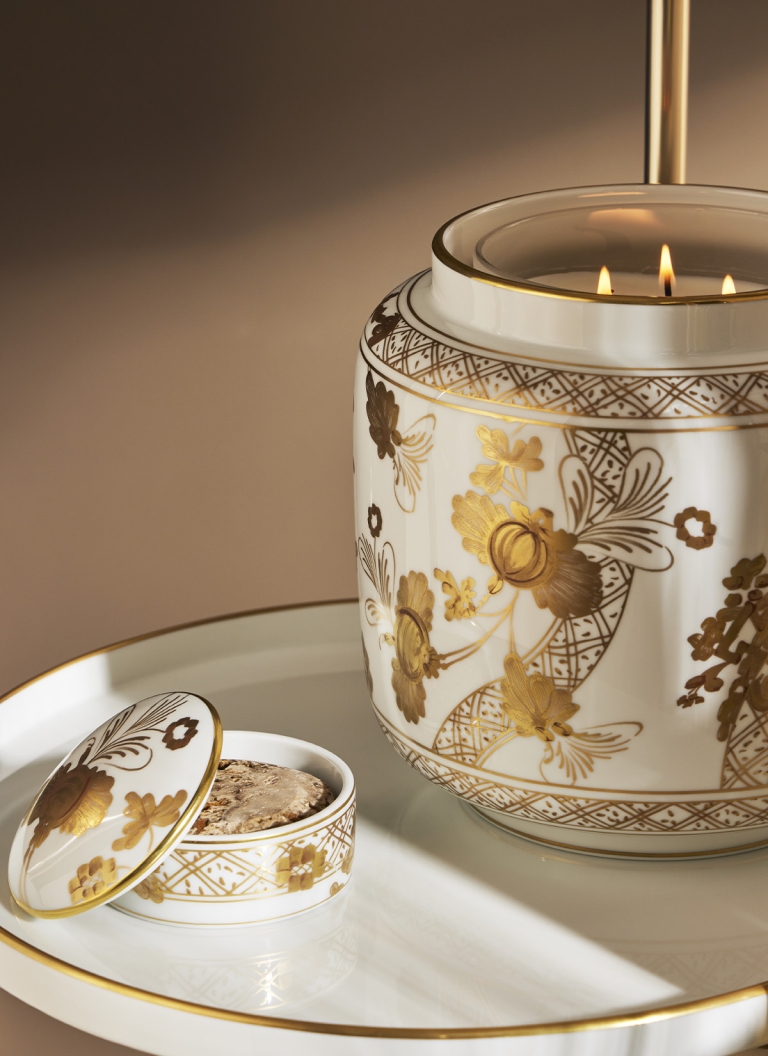
To properly prepare this item, we recommend adding two or three drops of essential oil directly onto the stone and waiting a few moments until the fragrance naturally disperses into the air. Repeat the process several times to increase the intensity of the scent. Additionally, it is advisable to place the stone inside the Ginori 1735 porcelain box.
- Which materials should not come into contact with the diffuser stone?
It is recommended to avoid contact with porous materials, fabrics, wood, and delicate surfaces, as essential oils may cause stains.

CRYSTAL
Instructions for care and maintenance
Handmade in Italy, our precious crystals reflect the care and passion that have always driven the creation of our pure porcelain. The glassware interprets the balance between the classical iconography of Ginori 1735 craftsmanship and the desire to experiment with style and refinement. Each piece, from wine glasses to pitchers, is unique: an authentic example of high Italian craftsmanship.
Our crystals fully comply with European regulations (CEE 69/493, ISO_7086 – 2nd edition 2000) and international standards (FDA Compliance Policy Guidelines, FDA CPG 7117.06 – 7117.07, and FDA/CFSAN 1999 Food Code para. 4.101.13), making them safe and suitable for containing food and beverages. Our crystal is designed with respect for the environment, health, functionality, and aesthetics: it is lead-free, brilliant and transparent, impact-resistant, and lightweight.
- How do I remove residual materials from production, shipping, or packaging?
We recommend filling the containers with equal parts vinegar or lemon juice and water and letting them sit for 24 hours. Then, empty the containers and rinse them with warm water. This way, you will properly prepare the crystal even for washing.
- Can I wash crystals by hand?
Yes, hand washing is possible but requires a few obvious precautions. To prevent scratches and breakage, do not wear rings and use a secure support base, preferably plastic. For washing, use a sponge or soft cloth, a mild liquid detergent, and warm water. Rinse with clean, warm water. After washing, always store the crystals upright, ensuring they are not too close to each other and kept in a room-temperature environment. To prevent chipping of the rim and breakage, the crystal should never be stored upside down or stacked.
- How should I dry crystals?
Dry gently by hand with a soft cloth, supporting the body of the glass.
- Can I use a dishwasher for Ginori 1735 crystal?
Yes, but only with liquid mild detergent and a short, low-temperature cycle. Ensure glasses are securely placed and that dishwasher salt is present.
- Can Ginori 1735 crystal go in the microwave?
No, crystals are not suitable for microwave or conventional oven use.
- How should I dry crystals decorated in gold or platinum?
It is recommended to pay special attention when drying crystal items decorated with gold and platinum. Before drying, wait for the crystal to cool down.
- What precautions help maintain the brilliance of the crystal?
The purity of Ginori 1735 glassware is preserved by cleaning stains and deposits left by tap water with a soft cloth soaked in vinegar.
- How to remove haze or opacity from crystal?
For streaks, cloudiness, or persistent residues, fill the piece with vinegar or lemon juice diluted in equal parts with water. Let the solution work for 3 to 4 hours, then empty and rinse with warm water. For hard-to-reach areas or corners that are impossible to clean, use the same vinegar and water solution with the addition of uncooked rice. By gently shaking the piece, the rice will help remove internal residues. Then empty the container and rinse with warm water.
- How to remove water deposits?
To clean stains and deposits left by tap water, we recommend using a soft cloth soaked in vinegar.
- Can I put crystal items in the freezer or refrigerator?
The use of freezers or refrigerators should be avoided, as crystal is highly sensitive to sudden temperature changes, which can cause irreparable fractures. Therefore, avoid pouring very hot or very cold liquids into crystal items.

CUTLERY
Instructions for care and maintenance
Ginori 1735 cutlery combines timeless elegance with everyday functionality, thanks to the use of high-quality materials. Inspired by the desire to accompany your moments of conviviality, we have designed knives, forks, and spoons in steel with a refined and functional character. Our cutlery sets in stainless steel, brushed black, silver, and vintage gold complete your table with elegance and creativity, turning every daily moment into an occasion for style and beauty — entirely made in Italy.
- What material are Ginori 1735 cutlery made from and which finishes are available?
Our cutlery is made of stainless steel and comes in three elegant finishes: brushed black, silver, and vintage gold. The stainless steel contains nickel, ranging from 8 % to 11 %.
- How should I wash Ginori 1735 cutlery?
Before first use and after every use, clean with hot water and a neutral detergent. Do not use chlorinated or bleaching synthetic detergents. Rinse and dry thoroughly. Immediately remove residues such as salt (NaCl), lemon, vinegar, tomato sauces, etc.
- Can I wash the cutlery in a dishwasher?
Yes, but ensure the dishwasher program includes perfect drying and polishing. Otherwise, finish manually. The blades of the knives are made of tempered stainless steel (type 420), which offers lasting sharpness but is more vulnerable to corrosive attack, so proper care is essential.
- Is it recommended to clean flatware with metal scouring pads?
Absolutely not. Avoid abrasive products such as metal scouring pads or synthetic ones like Scotch-Brite, which would irreversibly damage the cutlery.
- What care and storage principles should I follow for cutlery?
Wash with hot water and neutral detergent before and after use. Avoid chlorinated or bleaching synthetic detergents. Rinse and dry thoroughly, then store in a dry environment. Remove residues (salt, lemon, vinegar, tomato sauce, etc.) immediately to prevent surface damage.
- What should I do when washing cutlery in the dishwasher?
If using a dishwasher, it is important to ensure that the selected cycle includes proper drying and polishing. Otherwise, it is advisable to dry and polish the items manually immediately after washing.
- Why is it important to dry cutlery immediately after dishwasher cleaning?
The chlorine used to make water potable tends to transform into chloric acid (HClO₃) during the dishwasher cycle. This is a highly aggressive agent for silver and stainless steels, particularly those used in cutlery. The effect is so pronounced that colored halos and/or signs of corrosion can appear even after the very first dishwasher wash, including on brand-new items.
To reduce this issue, it is essential to remove the pieces from the dishwasher as soon as the wash and rinse cycle is complete, and dry them immediately.
To completely prevent the problem, it is advisable to install a dechlorinator upstream of the washing system.
- How can I prevent corrosive attacks on cutlery?
Knife blades are made of tempered stainless steel 420, which ensures lasting sharpness but also increases sensitivity to corrosive attack. It’s essential to maintain them properly. Avoid abrasive products like metal scouring pads or synthetic ones such as Scotch-Brite that would damage the surface.

BISCUIT PORCELAIN FOR ORNAMENTAL USE
Instructions for care and maintenance
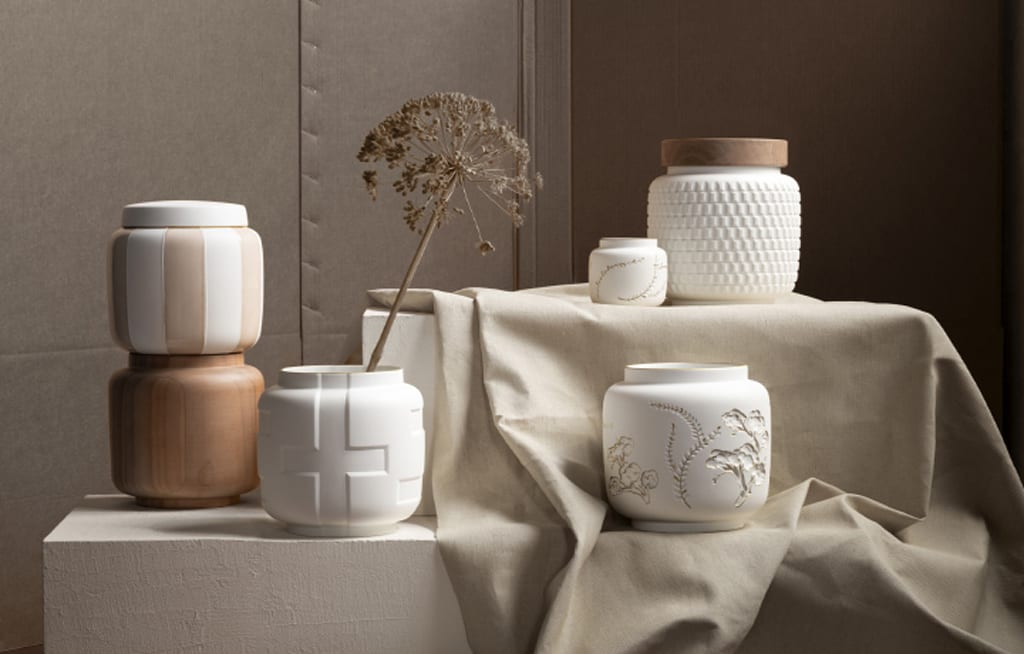
Biscuit porcelain for ornamental use is unglazed porcelain. Its matte and natural surface enhances the purity of the material, highlighting lines, volumes and details with simplicity and character, while still being a fully finished product in every respect.
- How should ornamental biscuit porcelain be cleaned?
For everyday cleaning, use a damp microfiber cloth or an antistatic duster.
For items decorated with precious metals such as gold or platinum, use a soft cloth or a polishing cloth; in case of oxidation or tarnishing, apply a small amount of a specific silver-cleaning product.
On decorated areas, avoid abrasive powders, abrasive sponges, steel wool and aggressive or acidic solvents. If necessary, items may be washed by hand using mild liquid detergents.
- How can grey marks left by metal objects be removed from ornamental biscuit porcelain?
For biscuit porcelain products (unglazed), in case of grey/black marks left by metal objects, it is recommended to use mildly abrasive or powder detergents on undecorated areas.
- Can ornamental biscuit porcelain be washed in the dishwasher?
No, hand washing with mild liquid detergents only is recommended. Avoid abrasive materials on decorated parts.
- Is it possible to stack biscuit porcelain vases?
Yes, they can be stacked, taking special care with gold-decorated rims, as they are more delicate and prone to abrasion.
- Can water and flowers be placed inside biscuit vases?
Yes, biscuit vases can be used with water and flowers. The “Walnut Wooden” vase from the Officina Ultra collection, although made of wood, features an internal cylindrical porcelain container that makes it suitable for this use.
- Can ornamental biscuit porcelain be placed in the freezer or refrigerator?
No, storing these items in either the freezer or the refrigerator is not recommended.
- Can ornamental biscuit porcelain be used in the oven, microwave, or in direct contact with flame?
No, these items are not suitable for use in ovens, microwaves, or on direct heat sources such as stovetops or open flames.