













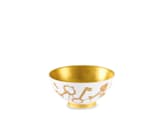
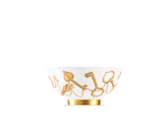

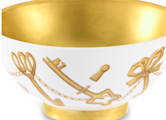

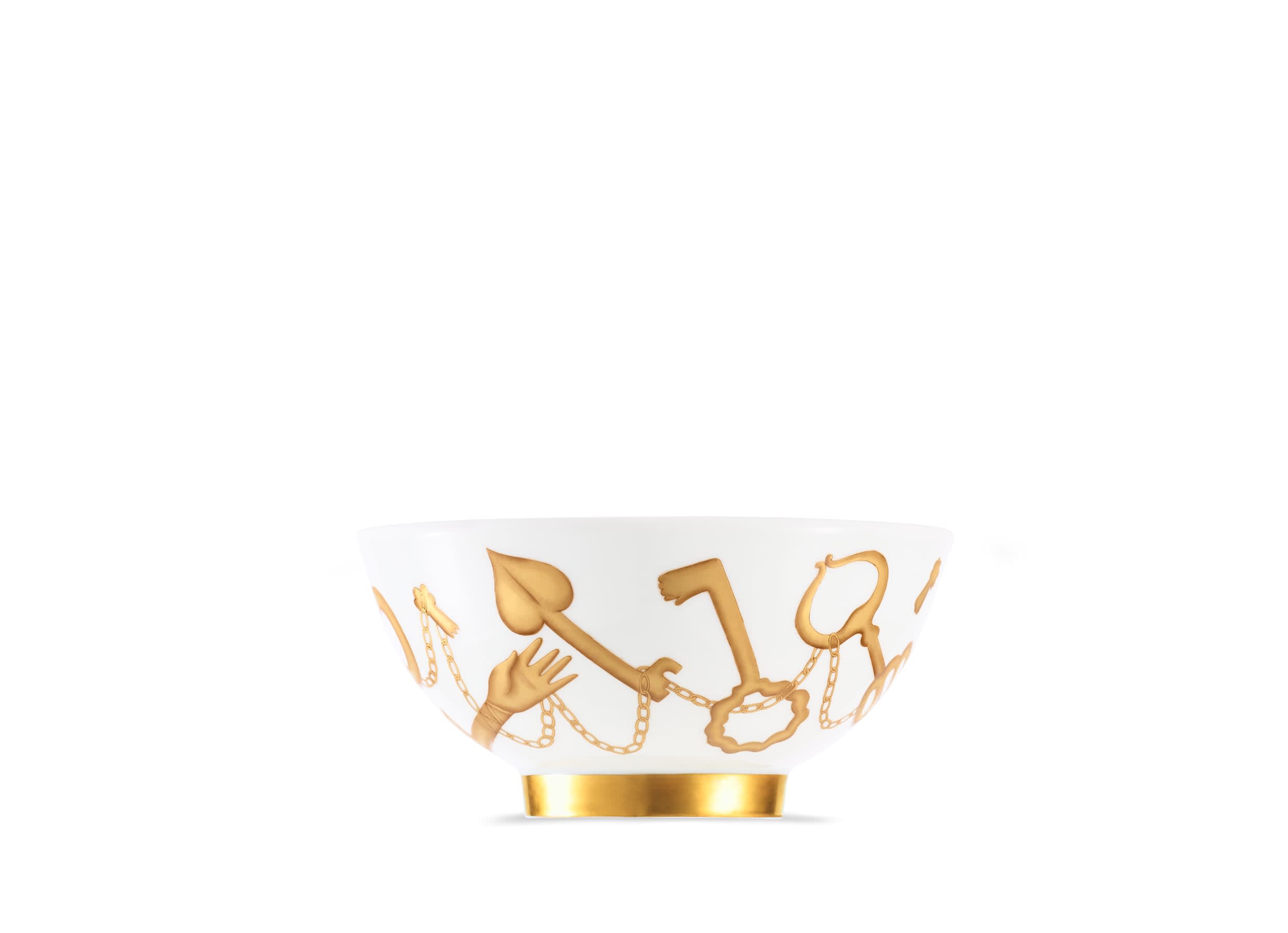


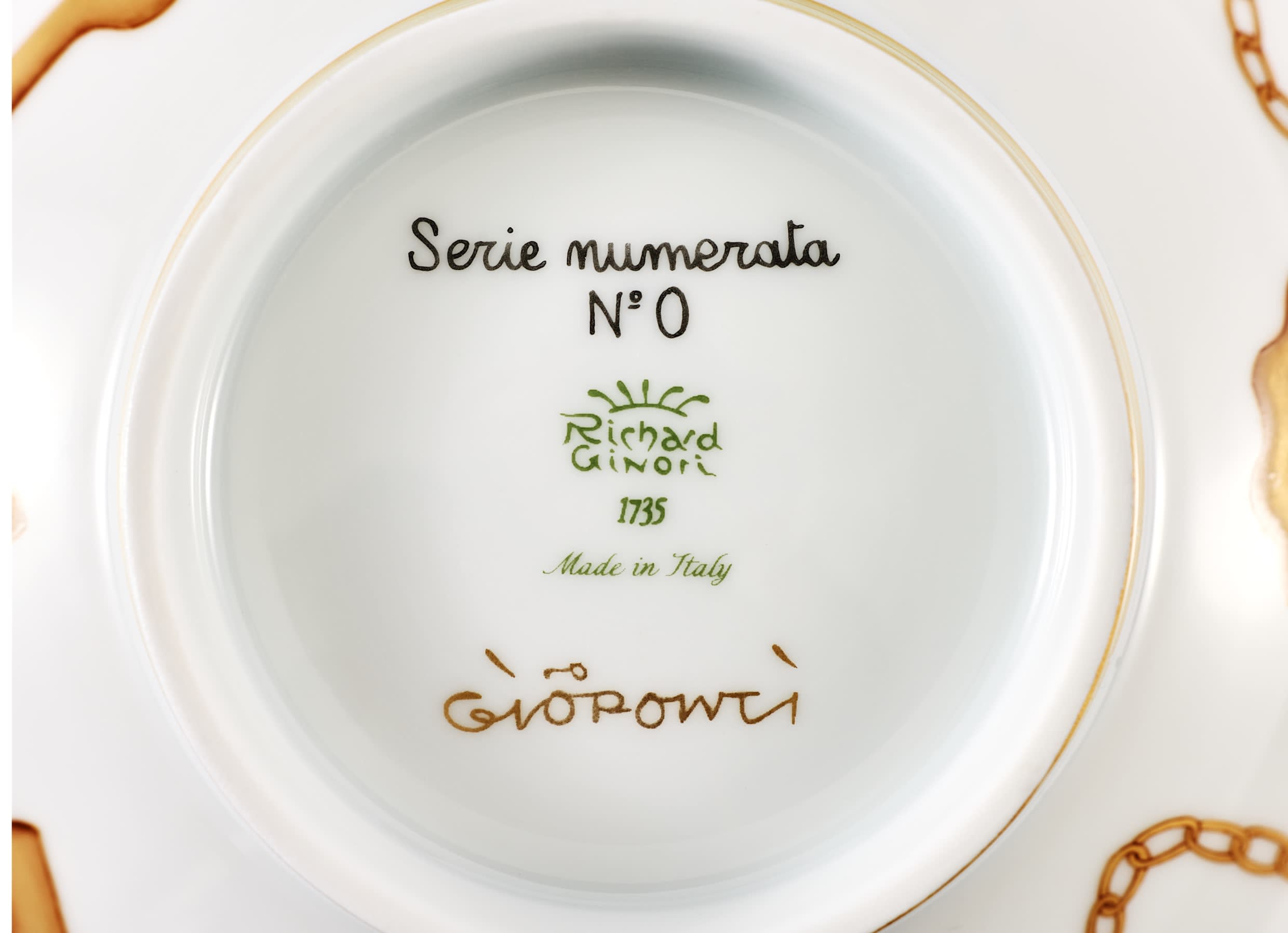
〈カテーナ ディ キアーヴィ〉と名付けられたこのボウルの外側には、その名の通り、金彩で鍵と鎖が描かれ、内側は金彩のサテン仕上げが施されています。謎めいた表現が、ラグジュアリーと象徴主義の出会いを生み出しています。
優れた美的価値を備えているだけでなく、多目的なホームデコレーションアイテムとしてもお使いいただけます。センターピースとして単独で使用すれば、ダイニングエリアの主人公としてひときわ存在感を放ちます。または、何か大切なものを収めておく置き場所としても機能的です。
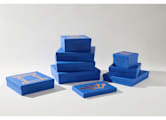
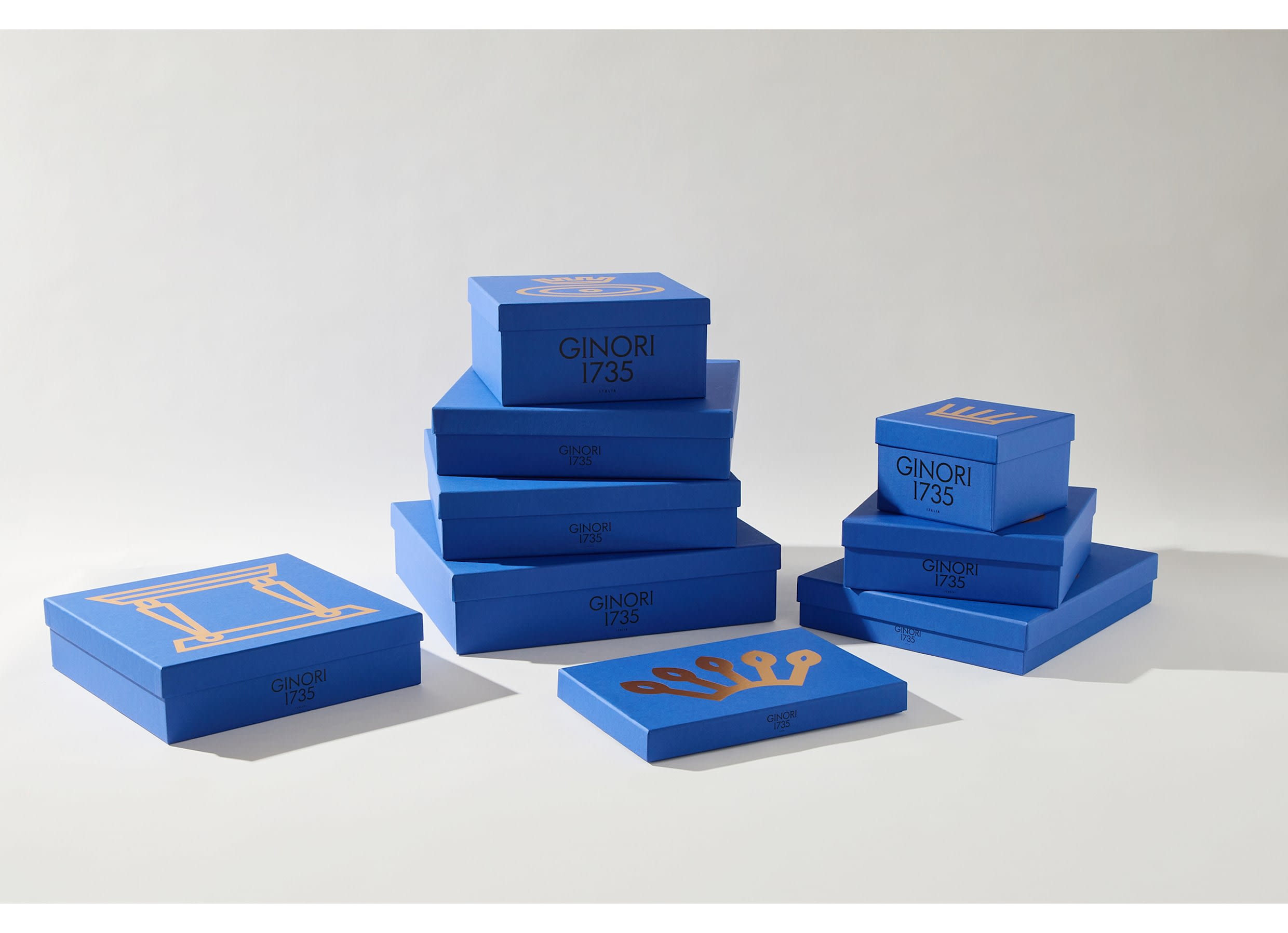
結婚式や記念日などの特別な機会のギフトとしてもぴったりなこのボウルは、特別感をさらに高めて演出するギフトボックス入りとなっています。
ジノリのアルテ コレクションで展開する各作品は、機能的な物体を象徴的な物語を伝えるオブジェへと変換し、ジオ・ポンティのモダンデザインの巨匠としての名声を確固たるものにしています。
カテーナ ディ キアーヴィ ジオ・ポンティ アルテ コレクションArte di Gio Ponti
〈カテーナ ディ キアーヴィ〉と名付けられたこのボウルの外側には、その名の通り、金彩で鍵と鎖が描かれ、内側は金彩のサテン仕上げが施されています。謎めいた表現が、ラグジュアリーと象徴主義の出会いを生み出しています。
優れた美的価値を備えているだけでなく、多目的なホームデコレーションアイテムとしてもお使いいただけます。センターピースとして単独で使用すれば、ダイニングエリアの主人公としてひときわ存在感を放ちます。または、何か大切なものを収めておく置き場所としても機能的です。
結婚式や記念日などの特別な機会のギフトとしてもぴったりなこのボウルは、特別感をさらに高めて演出するギフトボックス入りとなっています。
ジノリのアルテ コレクションで展開する各作品は、機能的な物体を象徴的な物語を伝えるオブジェへと変換し、ジオ・ポンティのモダンデザインの巨匠としての名声を確固たるものにしています。

The Chiavi pattern, conceived in 1935 for the famous L'Art Italien des XIXe et XXe siècles exhibition in Paris, is one of the most sophisticated and emblematic expressions of the designer's style. This work not only embodies the elegance and luxury of the Florentine maison, but is also distinguished by its use of rich and enigmatic symbolism, which characterizes all of Gio Ponti's production.
The keys, a recurring element in Geo Ponti's symbolic repertoire, are used as a motif to adorn the porcelain bowls by Ginori 1735, with rich, satiny interiors. Featuring intricate gold designs, the composition revolves around a spiral key chain of nine uniquely shaped keys – a foot, a hand, a leaf, a knot and others – that encircle the walls of the object. In other pieces designed by the artist, keys are scattered or engraved within the porcelain, finely carved with an agate point that enhances the mystery and aura of sacredness that permeates the entire work.
The use of gold and the constant presence of symbols laden with meaning exemplify the maestro's ability to transform everyday objects into poetic works of art that go beyond the mere decorative function, blending art, design and mystery into a unique harmony. These refined and esoteric creations are not random, but continue Gio Ponti's playful exploration of magical iconography, echoing themes from his earlier works, such as Esorcismo and Pontesca.
In the decade in which Gio Ponti revitalized the Richard Ginori Manifattura (1923-1933), he produced an extraordinary repertoire of designs rich in iconography and symbolism: works that testify to his ability to combine aesthetics and meaning, tradition and innovation, giving rise to a continuous and fascinating dialogue between past and present. This work, like others designed by Gio Ponti, further strengthens his position as one of the undisputed protagonists of 20th century design and architecture.

A pioneer in his field, architect and designer Gio Ponti combined traditional craftsmanship and modern aesthetics with a forward-looking and versatile approach, laying the foundations of Italian design in the 20th century. His work transcended the boundaries of individual disciplines, making him one of the most influential figures of Italian modernism and an icon of the Renaissance. In addition to his collaboration with Ginori 1735, his contributions were not limited to the world of porcelain: his career flourished through innovative architectural projects interior design and founding the Domus magazine, which solidified his status as a cultural and artistic visionary for nearly six decades. His constant search for beauty has left a legacy that continues to shape the contemporary landscape, inspiring generations of architects and designers.

Maestro Gio Ponti's tenure as artistic director of Richard Ginori from 1923 to 1933 marked a phase of rebirth for the historic porcelain manufacturer.
At a time of deep crisis, Gio Ponti managed to infuse it with a new spirit of modernity, combining the Italian artisan tradition with industrial innovation. Under his leadership, Richard Ginori became a symbol of elegance, innovation, excellence and creativity beyond national borders.
The maestro's skill in blending classical motifs with contemporary design and introducing iconographic and symbolic elements led to the creation of works of art.
With foresight, Gio Ponti succeeded in his intent: to position the Manifattura as a leader in modern porcelain and decor, enabling it to acquire a strong global appeal, which it still retains today.


The most beautiful works born from the creative genius of the great Gio Ponti, our artistic director for an incredible decade between 1923 and 1933.
